GMO crops - general
Study
The following is a study detailing the perception and acceptance of the scientific consensus on the safety of genetically modified organisms (GMOs). In 2017, researchers with Michigan State University’s Food@MSU initiative conducted the first nationwide Food Literacy and Engagement Poll. They asked more than 1,000 consumers about their knowledge of and opinions related to our food system, and of the science behind it. When asked whether they thought the statement “Genetically modified foods have genes and non-genetically modified foods do not,” was true or false, 37 percent of respo [...]
Study
The impact of Genetically Modified (GM) crops in modern agriculture: A review
Genetic modification in plants was first recorded 10,000 years ago in Southwest Asia where humans first bred plants through artificial selection and selective breeding. Since then, advancements in agriculture science and technology have brought about the current GM crop revolution. GM crops are promising to mitigate current and future problems in commercial agriculture, with proven case studies in Indian cotton and Australian canola. However, controversial studies such as the Monarch Butterfly study (1999) and the Séralini affair (2012) along with current problems linked to insect resista [...]
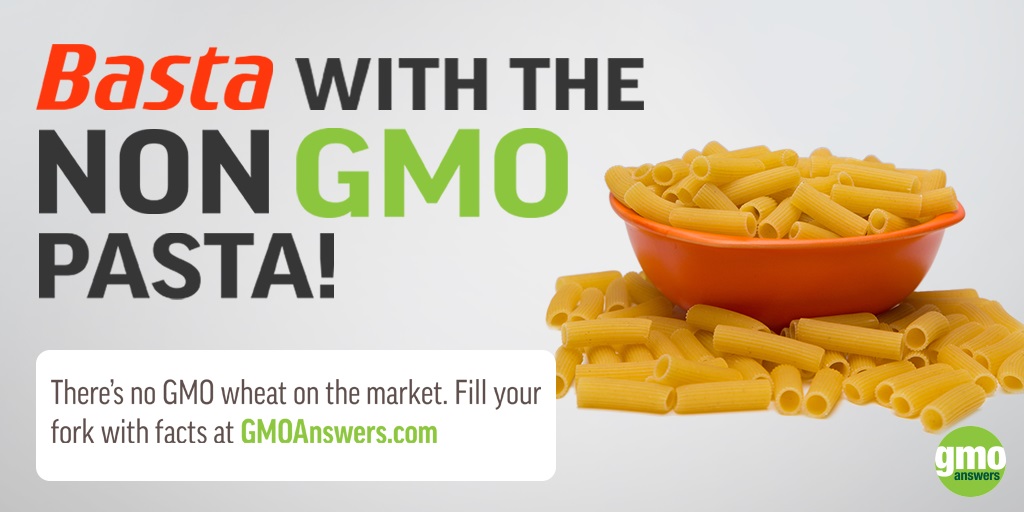
Current GMOs Crops Don't Include Pasta
Are you paying more for “non-GMO pasta?” Then you’re not using your noodle.
What are the facts?
There are only 10 genetically modified crops available today.
Those are:
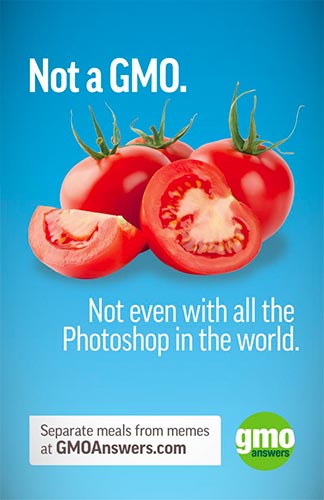
GMO tomatoes: a common misconception
You may have wondered ‘are tomatoes GMO’ or ‘is there such a thing as a genetically modified tomato’? The answer is no, while there may be an ‘m’ and two ‘o’s, there are no ‘GMOs’ in ‘tomato’.
Answer
A: There is currently no GMO honey commercially available today. However, nearly all foods today have been genetically modified or altered in some way over thousands of years through selective breeding. Although, there are only 10 commercially available GMO crops in the U.S: soybeans, corn (field and sweet), canola, cotton, alfalfa, sugar beets, summer squash, papaya, potatoes and apples. These 10 are the only GMO crops that are commercially available in the U.S., but it is also important to note that many of these crops are ingredients in other types of food you may find in your local grocery st [...]
GMO crops - general Not GMOsAnswer
A: Thank you for your question and interest, it is great you are a supporter of sciences. The traditional home gardening seed outlets do not sell/market/offer GMO crop seeds, one would have to work through a grower seed dealer/distributor, which would require appropriate licensing and a contract agreement. So anyone can purchase GM seed varieties – it simply requires going through a farm supply company, getting the required licensing and signing a contract. But typical gardener retail stores will not offer biotech seed varieties. Jennifer Bearden, the University of Florida IFAS Extensi [...]
GMO crops - generalAnswer
Q: Is the Rapsodie tomato hyb seed sold by syngenta GMO?
A: There are currently no tomatoes that are GMO on the market or commercially available. For more information about the common misinformation around GM tomatoes, please check out this previous response. Nearly all foods today have been genetically modified or altered in some way over thousands of years through selective breeding. However, there are only 10 commercially available GMO crops in the U.S: soybeans, corn (field and sweet), canola, cotton, alfalfa, sugar beets, summer squash, papaya, potatoes and apples. Below is a table outlining what year the 10 crops became commercially avai [...]
GMO crops - general TomatoesAnswer
Q: how many American societies consume Genetically modified food in 2006-2017?
A: Nearly all foods today have been genetically modified or altered in some way over thousands of years through selective breeding. However, there are only 10 commercially available GMO crops in the U.S: soybeans, corn (field and sweet), canola, cotton, alfalfa, sugar beets, summer squash, papaya, potatoes and apples. Below is a table outlining what year the 10 crops became commercially available in the U.S.: Squash 1995 Cotton 1996 Soybean 1995 Corn [...]
GMO crops - general Where GMOs are Grown GlobalAnswer
Q: Are Sun Pacific oranges GMO free?
A: Sun Pacific oranges are not a GM food, in fact all oranges are not a GM crop. Nearly all foods today have been genetically modified or altered in some way over thousands of years through selective breeding. But there are only 10 commercially available GM crops in the U.S: soybeans, corn (field and sweet), canola, cotton, alfalfa, sugar beets, summer squash, papaya, potatoes and apples. Below is a table outlining what year the 10 crops became commercially available: Squash 1995 Cotton 1996 S [...]
Not GMOs GMO crops - generalWhat is a GMO?

By definition, a GMO, or genetically modified organism, is a plant, animal or another organism that has had its genetic makeup modified in order to produce a more desirable outcome, such as enhanced nutrition or a stronger resistance to disease.
So, what is GMO in simple terms? Essentially, it’s a more precise method of plant breeding that creates a product that cannot be achieved through traditional farming methods.
For more than 10,000 years, humans have used a variety of plant breeding techniques – such as selective breeding, mutagenesis or genetic engineering – to produce plants with more useful characteristics. Genetic engineering, or biotechnology, differs from other plant-breeding techniques because it enables specific, predictable changes to be made to the plant. Plant breeders are able to take a desirable trait found in nature and transfer this trait from one organism to another, therefore creating a stronger crop. For example, they can genetically modify a crop to be more resistant to disease or more tolerant to herbicides. Learn more basic GMO facts here.