Earth Month: April Showers Bring May Flowers: What We’re Reading - April 2016
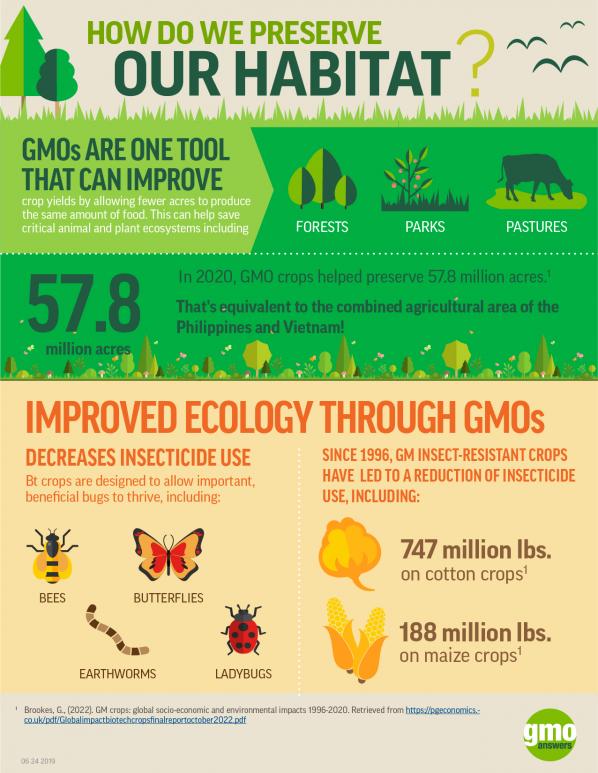
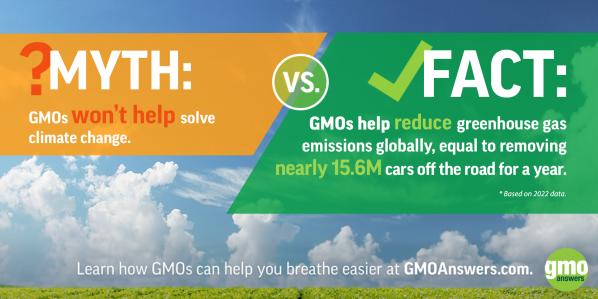
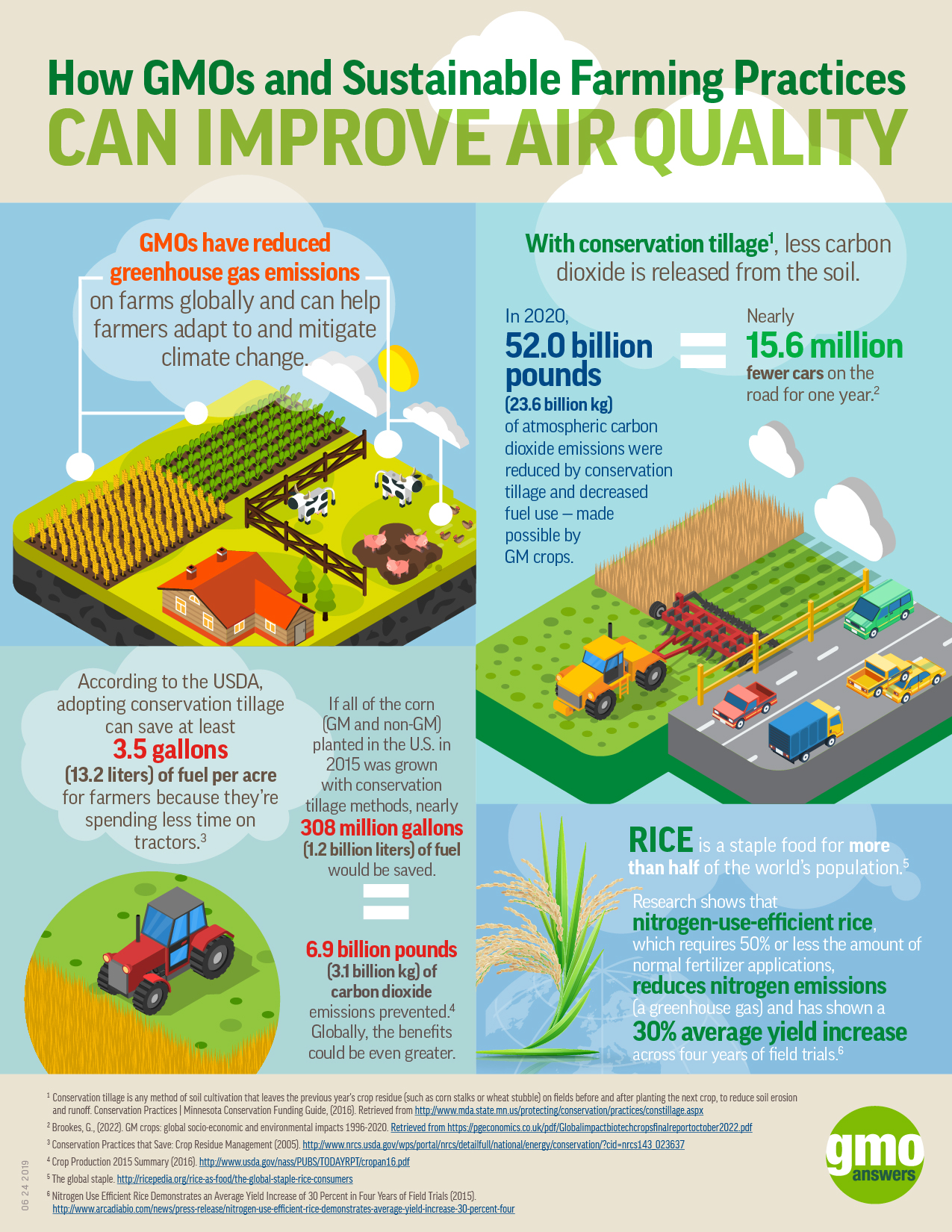
April was designated as Earth Month, and we’re reading stories that are talking about the positive impact that GMOs have on the environment. We’ve compiled a few of those pieces below, along with other articles that we thought were “must reads” this month.
April Showers Bring May Weeds and Pests Too
One of the biggest misconceptions about genetically modified crops is that they are bad for the environment, and you might be surprised to learn that there are actually many environmental benefits. Herbicide tolerant GMO crops allow farmers to control weeds with more targeted herbicides and practice no- or low-till production methods, a way of growing crops from year to year without disturbing the soil. This means the soil is healthier by retaining more moisture and nutrients, and there is less run-off into nearby waterways. And with GM crops, farmers make fewer insecticide applications, thanks to a technology that enables a plant to express a natural pesticide that targets specific pests but is not harmful to human, animals or non-target insects.
 In her article for the Genetic Literacy Project, If you care about the future of our planet, here’s why you should support GMOs, Michelle Miller writes that, “We see firsthand the benefits of GMOs. Over 90 percent of farmers have been using this technology for decades. Why do you suppose that is?” She goes on, “The reason why 90 percent of American farmers have embraced ag biotechnology is because it has substantially reduced our carbon footprint, while improving yields, farmer safety, and the environment at the same. It’s brilliant technology, really.”
Read the rest of her post at the Genetic Literacy Project.
When it rains, it pours
The question of the environmental safety of biotech crops has been around since their development. In David Colgan’s The curiosity and controversy of GMOs: a Q&A with Ted Parson, UCLA’s Ted Parsons, professor of environmental law and co-director of the Emmett Institute on Climate Change and the Environment, discusses the multiple factors that feed the controversy around GMOs in agriculture, including regulations, conflicts in international approvals, labeling, and the role social media plays in spreading “slogans” and “alarm.”
In the end, Parsons says, “It’s important to examine whether the risk concerns have adequately and honestly been put to rest by scientific research into health, environment, safety and other impacts so we can know that, on balance, GM crops provide an opportunity to better serve human needs rather than a threat to human welfare. If that’s the case, it’s time to encourage large-scale expansion in their use.”
Read Colgan’s full interview with Ted Parsons here.

Cloudy With a Side of Meatless Meatballs
One may not automatically assume that vegans support GMOs, but vegan Diana Peña, argues that there are plenty of reasons why they should. In Diana’s Vegan Manifesto, she writes that GMOs can help vegans meet their dietary needs, for example, by developing new crops with essential Omega-3 fatty acids, which are currently most commonly obtained from fish. Additionally, biotechnologies can be used to develop synthetic meat and dairy products, allowing vegans to eat animal protein without the slaughter and without the environmental footprint.
In addition to reducing food waste with products like the non-browning potato and apples, Diana notes that current GM crops have “yield-preserving traits, like Bt and Roundup-Ready, (that) allow for crops to beat pests like insects and weeds in a safe, effective way, and there are hundreds of independent studies to prove it. This means less land for agriculture being needed, allowing for more habitats for animals around the world.”
Diana challenges her fellow-vegans, “I became a vegan as an extension of my pacifist and environmentalist leanings. Because of this, I would hate to see fellow vegans stand in the way of protecting our fellow earthlings for baseless ideological reasons. Vegans could come together through finances, promotional manpower, and even by becoming researchers and educators to create a new generation of scientists to work on cellular agriculture.”
Read Diana’s entire Manifesto at the Genetic Literacy Project.
After the Rain Comes a Rainbow
Did you know that before they were orange, carrots were purple? That some of our favorite greens – kale, broccoli and Brussel sprouts – all came from the same wild mustard plant? That eggplant got its name because it originally resembled a small white egg, not the big purple fleshy vegetable we know today?
 The fact is that most of the food we eat today bears little to no resemblance to nature’s original version. And, as we’ve moved from an agrarian society to a predominantly urban one, most people have lost touch with where their food comes from.
Image credit: https://parksandgardensuk.wordpress.com/2015/12/05/the-colour-of-carrots/
In his Wall Street Journal article examining people’s attitudes around food and GMOs, Jayson Lusk, food and agriculture economist with Oklahoma State University, writes, “At the core of many anti-GMO arguments lies a romantic traditionalism, a desire for food that is purportedly more in line with nature. Perhaps we should eat only the food that God gave us. Yet manna rarely falls from heaven.”
The unfortunate consequence of this romantic vision is a stigmatization of GMOs - a technology proven to be beneficial to farmers, the environment and consumers – and critics looking to halt further biotechnology innovation. However, if technology and innovation are allowed to proceed, “the next generation of innovation is just around the corner: apples that will not brown, potatoes that produce fewer carcinogens when fried, staple crops in the developing world fortified with micronutrients, field crops in the Midwest that require less nitrogen fertilizer.”
Read more of Lusk’s opinion piece here.
The Sun Will Come Out Tomorrow
At The Conversation, James Borell, PhD researcher in Conservation Genetics at Queen Mary University of London, dives deeper into modern plant breeding techniques, shedding light on how genetic engineering, cloning, mutagenesis, cisgenesis, and other techniques are used by plant breeders to change the appearance, texture, and flavor of our fruits and vegetables.
“Let’s be clear,” Borell notes, “with global population set to hit nine billion by 2050 and the increasingly greater strain on the environment, GMOs have the potential to improve health, increase yields and reduce our impact. However uncomfortable they might make us, they deserve a sensible and informed debate.”
Get your weekly dose of GMO Answers at Forbes!

To continue the conversation about GMOs and biotechnology in agriculture beyond GMOAnswers.com, we are also hosting a column on Forbes.com! Every week, an independent or company expert will address questions and recent events about all things biotech. Make sure to read our post on biotech’s contribution to sustainability and the environment!