The Buzz on Bees
Originally posted at the SAIFood blog.
Are Farm Chemicals Harming Bee Populations?
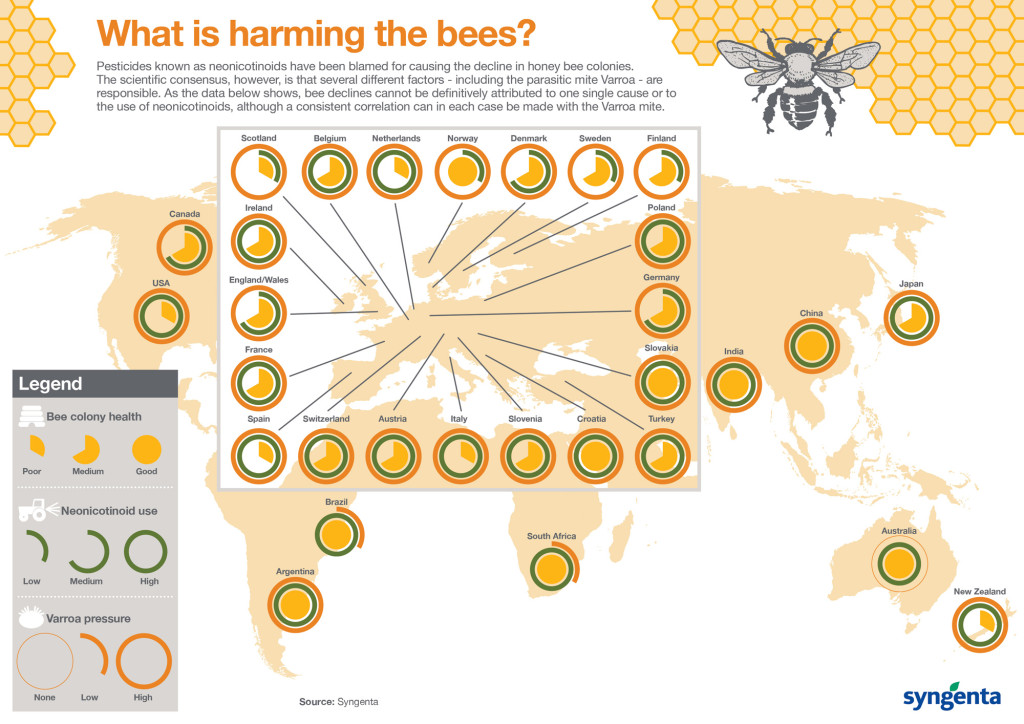
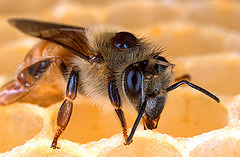 Over the past decade, there has been considerable discussion and debate about what is responsible for the decrease in bee populations in both North America and Europe. While environmental groups have been quick to advocate (without any evidence of course) that this was entirely due to GM crops and the modern chemicals used in agriculture; such accusations have not been proven true.
Source: U.S. Department of Agriculture, k9544-1 photo by Scott Bauer
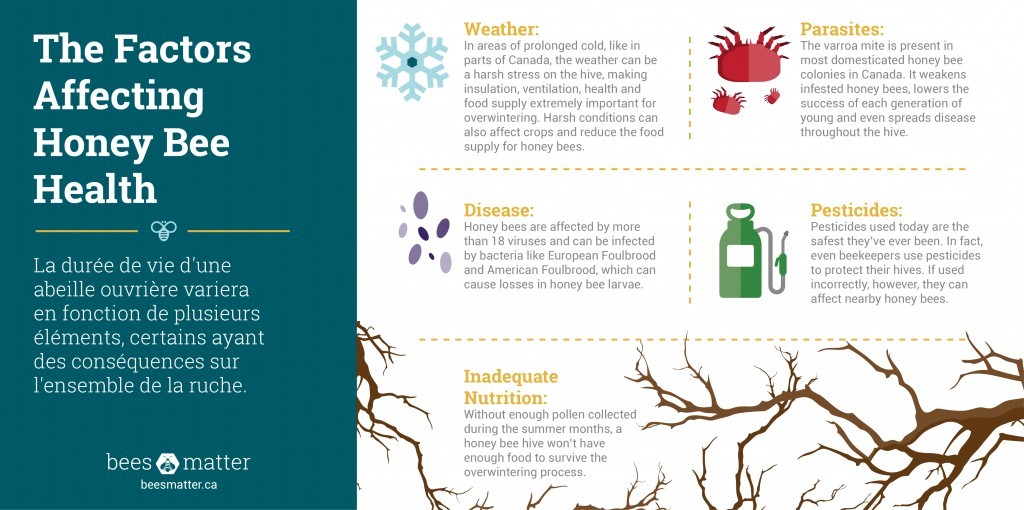
In fact, scientific research has pointed out numerous factors which may be contributing to the decline in the number of bees.
Previous research has demonstrated that varroa mites have had a substantial impact on bee populations. Additional impacts were attributed to colony collapse disorder, a mysterious problem for bees that so far has no known cause.
Research from the University of Ottawa earlier this summer indicates that the decline in bee populations is strongly related to climate change. Their results concluded that changes in farm applications of chemicals do not have any effect on bee colonies. Researchers examined bee colonies between 1975 and 2010, noting that the southern end of their range has moved north by up to 300 km in some instances, yet the northern boundaries have not moved further north. The condensed range for bees would help to explain why they are being hit hard by varroa mites and colony collapse disorder than might have been the previous case when bees had a larger range.
Identifying the true cause of bee declines is important for agriculture as many environmental organizations have been quick to blame farmers’ use of chemicals as being responsible. One group of chemicals, neonicotinoids, were particularly singled out for being responsible. Known more commonly as neonics, they are commonly used as a seed coating, providing season-long protection to the plant, particularly against insects. It is used on virtually all of the canola and corn seed that is planted. It is also widely used as a spray by the fruit and vegetable industry to ensure that insects don’t damage their crops. What the University of Ottawa research indicates is that the safe and efficacious use of chemicals by farmers in not having an impact on bee populations.
Unfortunately, this news arrives too late for farmers in Ontario! The Ontario provincial government has done what appears to be a backroom political deal with environmental groups to ban the use of neonics, in spite of the lack of scientific evidence that these chemicals have any impact of bee populations. This is an example of how European politics are being used by environmental groups in Ontario and Canada to override science-based evidence. Sadly, this will remove a safe farm chemical and result in farmers returning to use previous, less efficient chemicals, which in many cases will have a higher environmental impact than neonic chemicals. It is yet another example of how environmental groups are only interested in the political power that comes from opposing modern farming, not the science behind environmental sustainability.
For more information on bees visit Bees Matter.
Also sign-up to start your own bee garden and receive a package of seeds (while supplies last) to start planning next years bee garden.