Fall Harvest Time: What We’re Reading - September 2016
Fall Harvest Time: September What We’re Reading
It’s fall again, and for many people, that means visions of apple picking, hay rides, pumpkin patches, and of course, drinking lots and lots of pumpkin spice lattes! But it’s also a very important time of the year for many farmers: harvest season. Some examples of fruits and vegetables picked in the fall include apples, eggplants, squash, zucchini, and potatoes, all of which have a GMO variety, some of which are highlighted in this month’s “What We’re Reading.”
So if you’re heading out for a weekend of foliage watching in New England, visiting a giant corn maze in the Midwest, or biting into a pumpkin spice muffin, here’s some great reading material that might make you appreciate the fruits of fall harvests just a little bit more.
What we plant in the soil of contemplation, we shall reap in the harvest of action. – Meister Eckhart
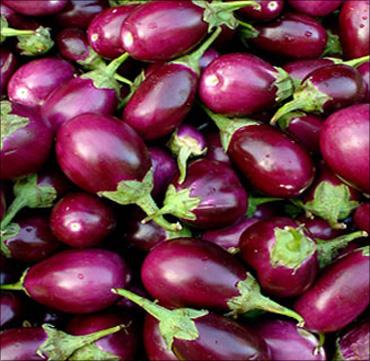 A new post at NeuroLogica science blog examines many of the reasons why some people oppose GMO technology, and highlights how one GE crop is a perfect example of the benefits agricultural biotechnology can provide.
Bt brinjal, a genetically modified eggplant, can have a major impact in Bangladesh, where some farmers have recently begun to grow the crop. The crop contains a natural protein from the bacillus thuringiensis (Bt) bacteria that kills the devastating shoot borer. Because Bt brinjal has the ability to protect itself against the pest, farmers can reduce pesticide applications in their fields.
The blog post notes, “Seeds were given to farmers who, by many accounts, are thrilled with the results. Brinjal is a staple in the region. Typically a farmer might expect 40% of their crop to be lost to pest damage. They have to spray heavy doses of insecticide 140-180 times throughout the growing season, as often as several times per week. Farmers growing the Bt varieties report a dramatic reduction in pesticide use by over 80% and virtually no crop loss to pests. The plants are healthy and productive.”
To read the entire post, please read, “Bt Brinjal – Destroying the Anti-GMO Narrative.”
 It is remarkable how closely the history of the apple tree is connected with that of man. ― Henry David Thoreau
Who doesn’t love apples? One of the best ways to eat apples is sliced with a bit of peanut butter or dipped in caramel. The only problem with this is that often the apple will brown after getting sliced, making them much less desirable to eat.
To combat this issue, one grower, Okanagan Specialty Fruit, has improved some of their apples so that they don’t brown and remain appealing, reducing food waste and satisfying picky eaters. The apples have been improved through a reduction of the enzyme polyphenol oxidase (PPO), the primary cause of browning in fruit.
The U.S. Department of Agriculture (USDA) have already approved the Arctic Golden and Arctic Granny Smith non-browning, and they are as safe and nutritious as conventional apples. The USDA has recently approved a third kind of non-browning apple, the Fuji.
For more information about these apples, including more scientific and nutritional information, visit the Arctic Apple website.
Autumn is the hardest season. The leaves are all falling, and they're falling like they're falling in love with the ground. ― Andrea Gibson
 After crops have been harvested, where does it go? The market? Your table? What if it never makes it there? What are the consequences if crops and food is wasted?
Mention the term food waste, and people will have many different ideas. Perhaps they’ll think of a family going through their refrigerator, tossing out all the food that has spoiled because they didn’t eat it quickly enough. Maybe they’ll think of food that gets shipped across the country, or even around the world, that goes bad before it reaches the people who need it. Perhaps they’ll think of restaurants and grocery stores throwing out food at the end of the night. Maybe, if they’re a farmer, they’ll think of all of the crops that got left in the field, or at the market because they weren’t purchased.
A new article by Andrew Porterfield at the Genetic Literacy Project discusses all of these issues, and points out that GMOs help reduce food waste. Whether it’s developing apples that don’t brown as quickly, or potatoes that don’t bruise as easily, or other produce that is improved to stay fresher, longer, GMOs can be part of the solution. And as is noted in the article, “By modifying crops to last longer in storage, farmers can sell more of them and they can be kept longer, which, overall, results in more food for all–something we’re going to need even more in the near future.”
Read more about food waste, and what we can do about it here.
 Before the reward there must be labor. You plant before you harvest. You sow in tears before you reap joy. - Ralph Ransom
Famed Nobel Peace Prize winner Norman Borlaug started the Green Revolution 50 years ago, by helping to increase food production in developing countries. At a recent meeting commemorating the golden anniversary of the Green Revolution, researchers and policymakers noted that in addition to improved yield “[f]actors such as the health of soils, drought tolerance, climate change, carbon sequestration, poverty reduction, more democratic approaches to land ownership and even mass migrations and refugee crises driven by food conflicts had to be taken into greater account.”
At that same meeting, Juergen Voegele, senior director of Agriculture Global Practice at the World Bank, and council chair of the CGIAR System, the main body of public agricultural research institutions, noted “The next 50 years are going to be much, much more complicated.”
To that end, the Chicago Global Council on Global Affairs has announced its new Global Food for Thought series: Feeding 2050: Science, Food, and Equity. This new program will focus on three of the major challenges facing the global food system in the upcoming decades: the changing economics and demographics worldwide, strains and burdens put on food production, and climate change and changes to natural resources.
Much like Normal Borlaug and his Green Revolution peers did 50 years ago, the series will explore how society will survive the future, and how to make sure that food production changes along with all of the other changes in the world. For more information about this installment of the Global Food for Thought series, please click here.
Get your weekly dose of GMO Answers at Forbes!
 To continue the conversation about GMOs and biotechnology beyond GMOAnswers.com, we are also hosting a column on Forbes.com! Every week, an independent or company expert addresses questions and recent events about all things biotech.