


Get To Know GMO's Market
| What is a GMO? | GMOs - Today and Tomorrow |
| What crops are GMOs? | Are GMOs safe? |
| How are GMOs made? | How are GMOs studied and regulated? |
Plant breeders use dozens of breeding techniques to create new varieties of crops with traits or characteristics they need, and one of these techniques is genetic engineering. GMOs are plants that – through genetic engineering – have had one or a few genes added, moved or turned off to achieve the desired trait.
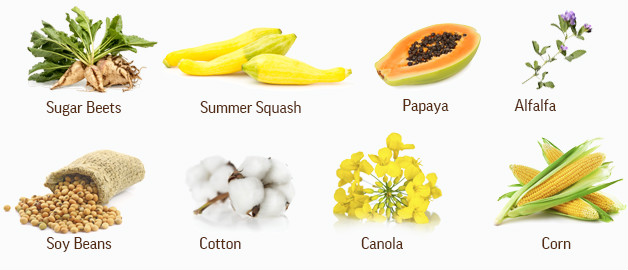
What crops are GMOs?
There are currently only eight commercially available GMO crops in the U.S. including: soybeans, corn (field and sweet), papaya, canola, cotton, alfalfa, sugar beets and summer squash. Potatoes and apples have recently been deregulated and may be seen on store shelves as soon as 2016. Only a few products in the produce aisle are GMOs―some sweet corn, some summer squash and Hawaiian Rainbow Papaya.


What is GE used for? Just like with the Hawaiian Rainbow papaya, GMOs are created to achieve a desired trait, which meets a specific need - such as resistance to a disease or insects. Today’s GMO crops are created to resist insects, tolerate herbicides, fight diseases, resist drought, or have Increased/enhanced nutritional content.
Tomorrow's GMOs
The most well-know applications of genetic engineering are herbicide and insect resistance, but the technology has endless potential applications for human and environmental benefit. GE could be used to develop treatments for life-threatening illnesses like Ebola, help fight the plant disease that currently threatens Florida’s citrus industry, provide more nutritious, higher yielding staple crops globally like cassava and rice, and restore near-extinct plant species like the America Chestnut tree.

Yes! GMO crops have the same nutrition and composition as non-GM crops, and food from GMOs is digested in the body the same as food from non-GM crops.
Commercialized GMOs on the market today do not present any new health risks — there is no evidence that they cause new allergies, cancer, celiac disease or gluten intolerance, autism, or any other diseases or conditions. They are the most tested crops in the history of agriculture, and farmers have grown GM crops for about 20 years.
How are GMOs studied and regulated?
Unlike foods produced by other methods, GMOs on the market today are tested for food safety, including for allergenicity, digestibility and toxicity. In fact, GM seeds take an average of $136 million and 13 years to bring to market because of extensive research and regulatory reviews conducted by up to three U.S. government agencies, including the USDA, EPA and FDA, as well as numerous other regulatory bodies around the world.

But what about the alarming things I've read about GMOs?
You’ll find a lot of misinformation and false claims about GMOs on the Internet. We’re happy to answer any questions you have about GMOs or help you fact check any information. Ask us anything online on Twitter at @GMOAnswers. We’re also on Reddit at r/gmoanswers and Facebook.com/GMOAnswers.