This Genetic Literacy Project article explores how modern agriculture and biotechnology could help reduce greenhouse gas emissions.
(Originally posted January 7, 2016)
The GLP aggregated and excerpted this blog/article to reflect the diversity of news, opinion and analysis.
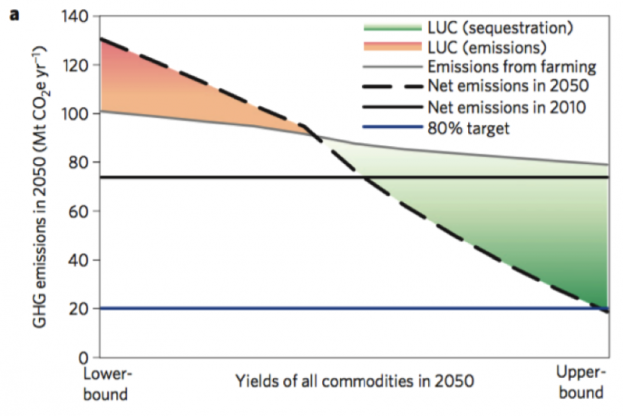
An excellent paper published in the journal Nature Climate Change sheds new light on the potential for agricultural efficiency to help tackle global warming. . . Looking at the UK farming sector, it estimates that yield improvements could offset as much as 80 percent of the country’s farming emissions in the most optimistic scenarios. The graph below shows the relationship between yield and greenhouse gas emissions.
 1center?
Figure 1, ‘Mitigation of greenhouse gas emissions from agriculture by land sparing’, from Lamb, A. et al, ‘The potential for land spring to offset greenhouse gas emissions from agriculture’, Nature Climate Change, January 2016
How do these yield improvements come about? As expected, there is no one-size-fits-all solution. Genetic improvements can contribute in numerous ways, but agronomic considerations such as fertiliser use and crop rotations also have an effect. Reducing food waste is also critically important. Unfortunately, the trend in European farming has been towards a plateauing of yield increases since the 1990s, as the graph below shows. Reversing this levelling out of yield growth is clearly an immediate priority.
You can read the full article here.